
Intermittent Fasting Schedule Planner
Use our free intermittent fasting schedule planner to create your personalized fasting and eating window plan. Choose your method, set your wake time, and get your full daily schedule instantly.
How to use this intermittent fasting schedule planner
Our intermittent fasting schedule planner generates your complete daily fasting and eating window plan in seconds. Simply choose your method and preferred wake time.
Select your fasting method — 16:8 is best for beginners, 18:6 for intermediate fasters.
Enter your wake up time — the planner builds your fasting schedule around your morning routine.
Select your goal — weight loss, maintenance, or general health optimization.
Hit Generate to see your full fasting and eating windows for every day of the week.
What is intermittent fasting?
Intermittent fasting is an eating pattern that cycles between periods of fasting and eating. Unlike traditional diets that focus on what you eat, an intermittent fasting schedule focuses on when you eat. As a result, it is not a diet in the conventional sense — it is a structured timing approach to eating that can be combined with any dietary preference.
During the fasting window, you consume no calories — only water, black coffee, and plain tea are permitted. Furthermore, the eating window does not require calorie counting, though combining intermittent fasting with mindful eating produces the best results. Research from institutions including Johns Hopkins Medicine suggests that fasting periods trigger metabolic switching, where the body shifts from burning glucose to burning stored fat for fuel.
The four most popular intermittent fasting methods
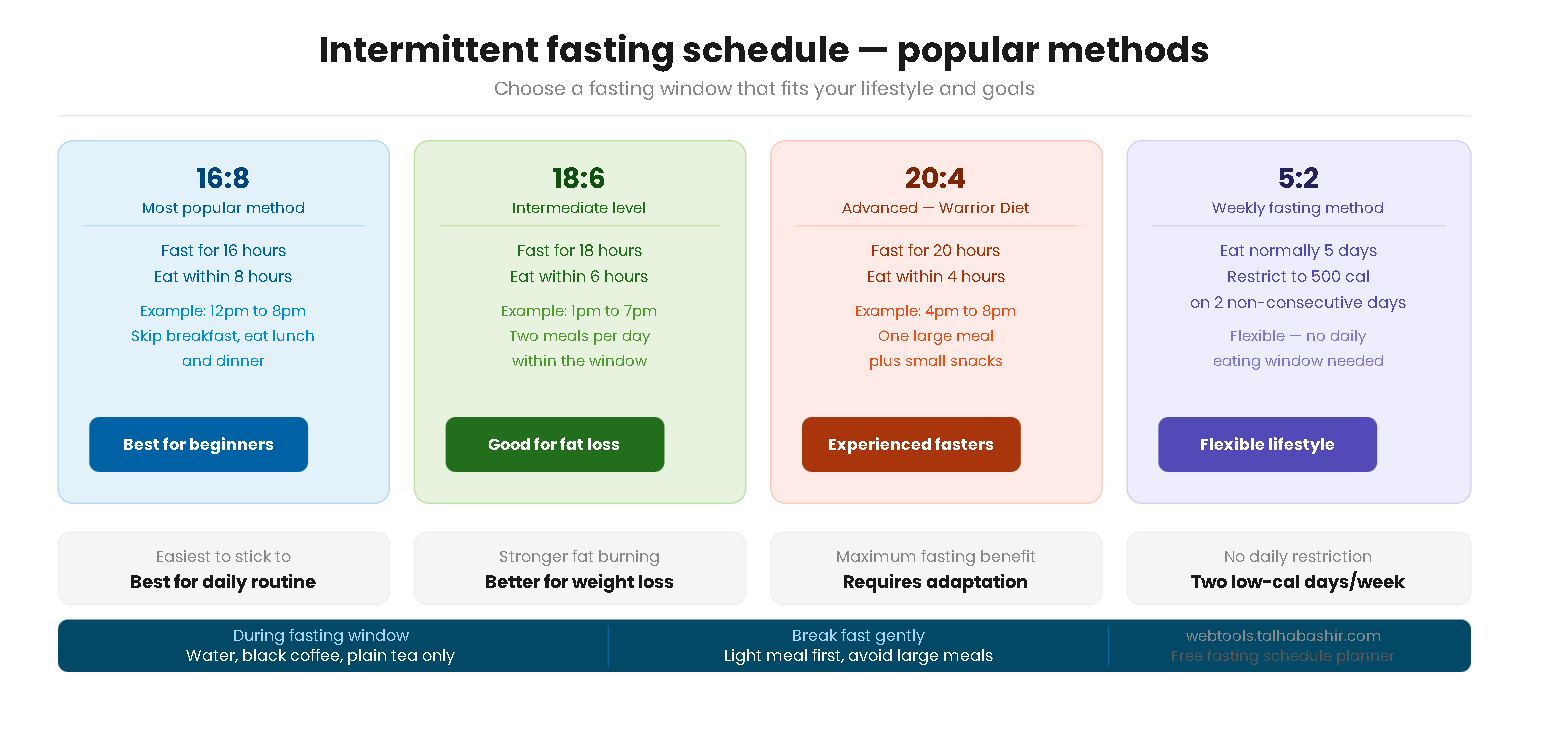
16:8 Method — Most Popular
Fast for 16 hours and eat within an 8-hour window each day. Most people achieve this by skipping breakfast and eating from noon to 8pm. This is the most widely practiced intermittent fasting schedule and the easiest for beginners to adopt without disrupting daily routines.
18:6 Method — Intermediate
Fast for 18 hours and eat within a 6-hour window. This typically means eating between 1pm and 7pm, fitting two full meals comfortably within the window. The additional fasting hours compared to 16:8 extend the fat-burning window and can accelerate weight loss results.
20:4 Warrior Diet — Advanced
Fast for 20 hours and eat within just a 4-hour window, typically in the evening. This allows one large meal plus small snacks within the eating period. The 20:4 method, popularized as the Warrior Diet, produces strong fat-burning effects but requires significant adaptation and is not recommended for beginners.
5:2 Method — Flexible
Eat normally for five days per week and restrict calories to approximately 500 to 600 on two non-consecutive days. Unlike daily fasting methods, the 5:2 intermittent fasting schedule does not require a daily eating window — making it highly flexible for people with varying schedules.
Benefits of an intermittent fasting schedule
Research into intermittent fasting has grown significantly over the past decade. Studies show a range of potential benefits beyond weight loss when a consistent intermittent fasting schedule is followed correctly.
Weight and fat loss
By reducing the eating window, most people naturally consume fewer calories. Additionally, extended fasting periods deplete liver glycogen stores, causing the body to burn stored fat for energy — a process known as metabolic switching.
Improved insulin sensitivity
Fasting periods lower blood insulin levels, which promotes fat burning and may reduce the risk of type 2 diabetes. Furthermore, research shows that intermittent fasting can reduce fasting blood sugar levels by 3 to 6% in some individuals.
Cellular repair (autophagy)
During fasting, the body initiates autophagy — a cellular cleanup process where damaged cells are broken down and recycled. This process is associated with reduced inflammation and may have long-term protective effects against disease.
Mental clarity
Many people report improved focus and mental clarity during fasting periods. Consequently, some professionals deliberately schedule demanding cognitive work during their fasting window to take advantage of this effect.
Simplified eating
A structured intermittent fasting schedule eliminates the need to plan multiple meals throughout the day. As a result, many people find it reduces decision fatigue around food and simplifies their daily routine significantly.
Potential longevity benefits
Animal studies have shown promising links between intermittent fasting and lifespan extension. While human research is still developing, the metabolic and cellular benefits observed suggest positive long-term health effects.
Tips to succeed with your intermittent fasting schedule
Starting an intermittent fasting schedule is straightforward. Sticking to it consistently requires the right strategies, particularly in the first two to four weeks while your body adapts.
Getting started
- Start with 16:8 — if you are new to fasting, begin with the 16:8 method before progressing to longer fasting windows. The adaptation period is much shorter and the method fits naturally into most daily routines.
- Stay hydrated — drink water, black coffee, and plain tea freely during your fasting window. Staying hydrated significantly reduces hunger and makes the fasting period much more manageable.
- Keep busy during fasting hours — hunger is largely psychological during short fasting periods. Engaging in work or light activity during the fasting window distracts from food thoughts effectively.
Breaking your fast correctly
- Break fast with a light meal — after an extended fast, start with something easy to digest like eggs, yogurt, or fruit rather than a large heavy meal. This prevents digestive discomfort and blood sugar spikes.
- Prioritize protein and fiber — eating protein and fiber-rich foods early in your eating window promotes satiety and helps you maintain a calorie deficit naturally without strict counting.
- Avoid overeating in the eating window — intermittent fasting works best when you eat nutritious, appropriate-sized meals during your eating window rather than compensating for fasted hours.
Intermittent fasting is not suitable for everyone. Pregnant or breastfeeding women, people with a history of eating disorders, those with diabetes on medication, and anyone under 18 should consult a healthcare professional before starting any fasting schedule.
Learn more from trusted health resources:
NIH.gov — Intermittent Fasting Research Johns Hopkins Medicine — Intermittent Fasting Guide