
Macro Nutrient Calculator
Use our free macro nutrient calculator to find your ideal daily protein, carbohydrate, and fat intake based on your body stats and fitness goals. No sign-up required.
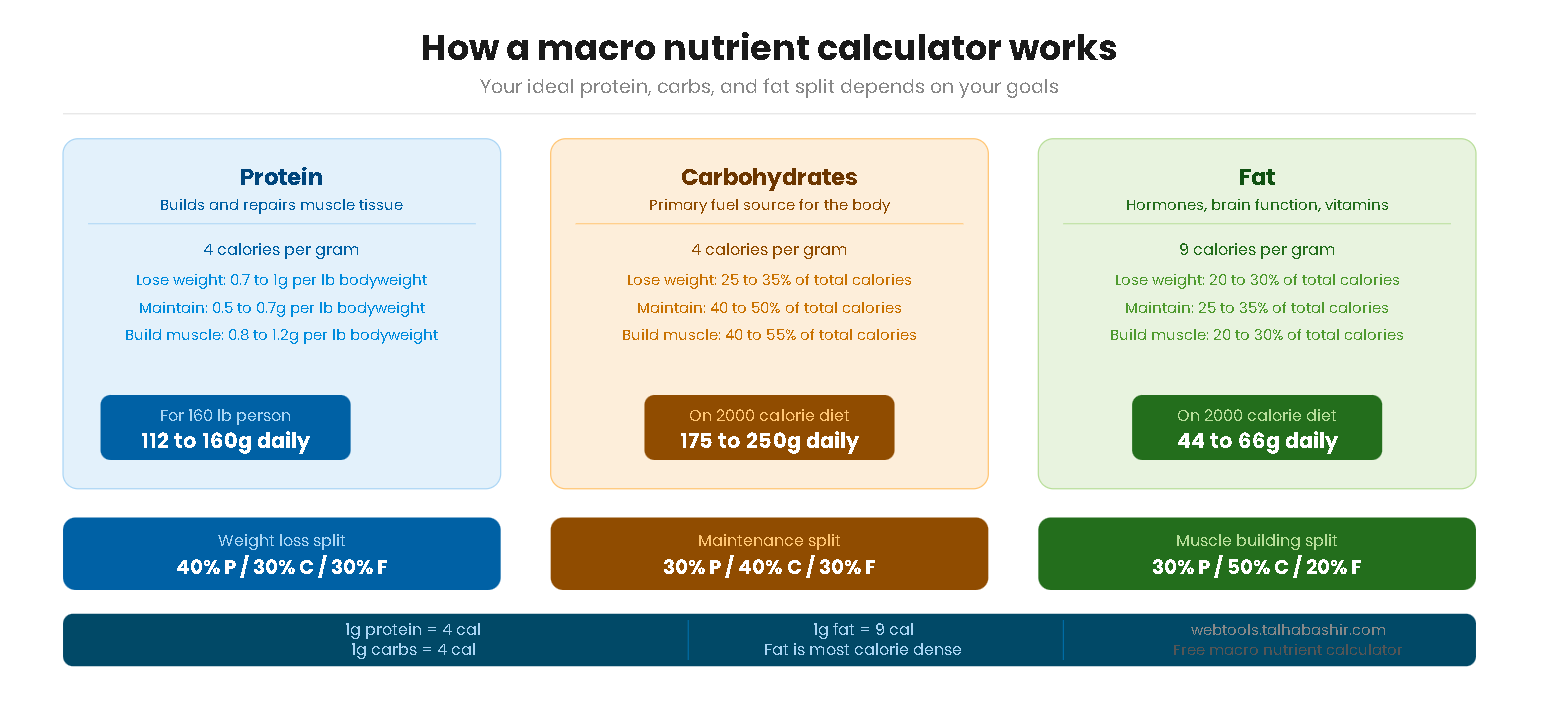
How to use this macro nutrient calculator
Our macro nutrient calculator gives you a personalized daily breakdown of protein, carbs, and fat in seconds. Simply enter your details and select your goal.
Select your gender and enter your age — both affect your metabolic rate calculation.
Enter your weight and height to calculate your BMR and daily energy needs accurately.
Select your activity level — be realistic, as overestimating is the most common mistake.
Choose your fitness goal — lose weight, maintain, or build muscle — and hit Calculate.
What are macro nutrients?
Macro nutrients — commonly called macros — are the three main categories of nutrients that provide your body with energy. Our macro nutrient calculator helps you find the right balance of all three based on your specific goals. Each macro serves a distinct purpose in the body and contributes a different number of calories per gram.
The three macronutrients explained
Protein — 4 calories per gram
Protein is essential for building and repairing muscle tissue, producing enzymes and hormones, and supporting immune function. Furthermore, protein is the most satiating macro — it keeps you feeling full longer than carbs or fat. Best sources include chicken, fish, eggs, Greek yogurt, tofu, legumes, and lean beef.
Carbohydrates — 4 calories per gram
Carbohydrates are the body's preferred and most efficient fuel source, particularly for the brain and during high-intensity exercise. Not all carbs are equal — complex carbs from oats, rice, sweet potatoes, and whole grains provide sustained energy, while simple sugars cause rapid spikes and crashes.
Fat — 9 calories per gram
Dietary fat is critical for hormone production, brain health, and the absorption of fat-soluble vitamins A, D, E, and K. Additionally, healthy fats from avocados, nuts, olive oil, and fatty fish support cardiovascular health. Fat is the most calorie-dense macro at 9 calories per gram, so portions matter more.
Macro nutrient splits by fitness goal
The right macro split depends entirely on your fitness goal. Our macro nutrient calculator automatically applies the optimal ratio for your selected goal. Here is a breakdown of how the splits differ and why:
| Goal | Protein | Carbohydrates | Fat |
|---|---|---|---|
| Lose weight | 35–40% | 30–35% | 25–30% |
| Maintain weight | 25–30% | 40–45% | 25–30% |
| Build muscle | 25–30% | 45–50% | 20–25% |
| Keto (low carb) | 25–30% | 5–10% | 60–70% |
Key principle — total calorie intake matters more than macro ratios for weight change. However, getting your macros right determines body composition, energy levels, and how well you feel while achieving your goal.
Tips to hit your daily macro targets
Knowing your macro targets from our macro nutrient calculator is only half the battle. Consistently hitting them requires planning and the right habits.
Track your food intake
- Use a macro tracking app — apps like MyFitnessPal, Cronometer, or MacroFactor let you log meals and see your macro breakdown in real time. Most have large food databases that make logging quick.
- Weigh your food — estimating portion sizes leads to significant errors, especially for calorie-dense foods like nuts, oils, and cheese. A digital kitchen scale removes all guesswork.
- Plan meals in advance — knowing your meals for the day before you start eating makes it significantly easier to hit your macro targets consistently.
Prioritize protein first
- Build meals around protein — start with your protein source and build the rest of the meal around it. This ensures you hit your protein target before running out of calories.
- Spread protein across meals — research suggests the body can optimally use around 30 to 40g of protein per meal. Therefore, spreading your intake across 3 to 5 meals maximizes muscle protein synthesis.
- Recalculate regularly — as your weight changes, your macro targets change too. Update our macro nutrient calculator every 10 to 15 pounds to keep your targets accurate.
Learn more from trusted nutrition resources:
NIH.gov — Dietary Guidelines for Americans CDC.gov — Nutrition and Healthy Eating