
Water Intake Calculator
Use our free water intake calculator to find out exactly how much water you should drink every day based on your weight, activity level, and climate. No sign-up required.
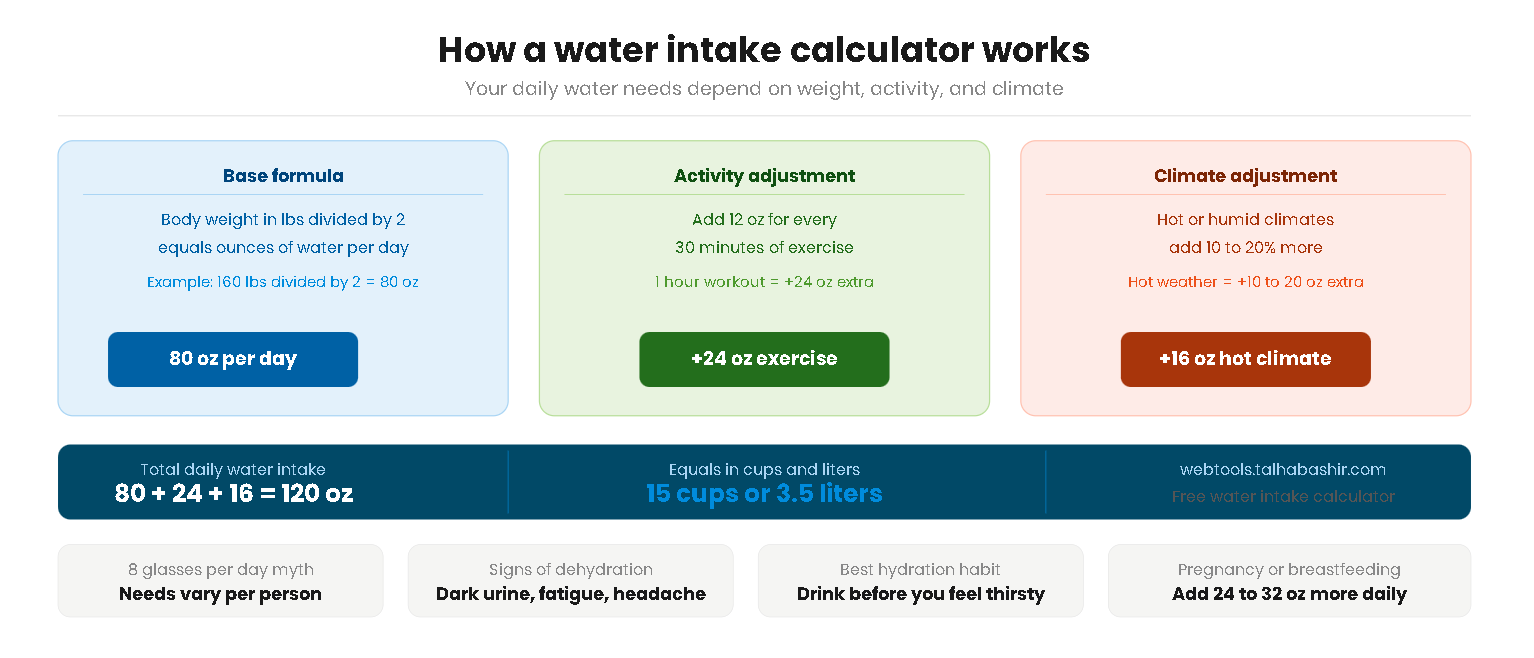
How to use this water intake calculator
Our water intake calculator gives you a personalized daily hydration target in seconds. Simply enter your details and the calculator adjusts for every factor that affects your water needs.
Enter your body weight in pounds — heavier bodies require more water to function properly.
Select your daily exercise duration — sweat loss significantly increases your water needs.
Select your climate — hot and humid environments increase fluid loss through perspiration.
Add any special conditions and hit Calculate to get your personalized daily water target.
Why your daily water intake matters
Water is essential for virtually every function in the human body. Our water intake calculator helps you find your personal hydration target because the commonly cited advice of "8 glasses a day" does not account for individual differences in weight, activity, or environment.
In fact, research shows that most Americans are chronically mildly dehydrated — not severely enough to feel thirsty, but enough to impair cognitive function, energy levels, and physical performance. Therefore, using our water intake calculator to find your specific daily target is a far more effective approach than following a generic guideline.
Key benefits of proper hydration
Physical performance
Even mild dehydration of 1 to 2% of body weight can reduce exercise performance by up to 20%. Adequate water intake maintains endurance, strength, and recovery speed.
Brain function
Studies show that dehydration impairs concentration, short-term memory, and mood. Furthermore, headaches — one of the most common complaints — are frequently caused by insufficient water intake.
Weight management
Drinking water before meals reduces calorie intake by creating a feeling of fullness. Additionally, the body sometimes confuses thirst for hunger, leading to unnecessary snacking.
Kidney health
Adequate hydration helps kidneys filter waste efficiently and significantly reduces the risk of kidney stones. Consequently, people with a history of kidney stones should drink even more than the standard recommendation.
Digestion
Water is essential for breaking down food and absorbing nutrients. Moreover, it prevents constipation by keeping the digestive tract moving smoothly.
Skin health
Proper hydration maintains skin elasticity and moisture. While drinking more water alone will not erase wrinkles, dehydration visibly affects skin texture and appearance within hours.
How our water intake calculator determines your target
Our water intake calculator uses a scientifically grounded multi-factor formula that accounts for your individual characteristics rather than applying a one-size-fits-all number.
Base calculation
The foundation of our water intake calculator is the body weight method — one of the most widely used approaches endorsed by nutritionists. Specifically, the base recommendation is to drink half your body weight in ounces per day.
For example, a person weighing 160 lbs has a base water intake target of 80 oz per day. This baseline is then adjusted upward based on three additional factors.
Exercise adjustment
Physical activity causes fluid loss through sweat. As a result, the calculator adds approximately 12 oz of water for every 30 minutes of exercise. A one-hour workout therefore adds 24 oz to your daily target — roughly three additional cups of water.
Climate adjustment
Hot and humid climates significantly increase perspiration, even without formal exercise. Our water intake calculator adds 10 to 30 additional ounces depending on your climate setting to compensate for this additional fluid loss.
A simple hydration check — look at the color of your urine. Pale yellow means well hydrated. Dark yellow or amber indicates dehydration. Aim for light lemonade color throughout the day.
Tips to hit your daily water intake goal
Knowing your target is the first step. Consistently reaching it requires building the right habits. Here are the most effective strategies to stay hydrated throughout the day:
Build hydration habits
- Start your day with water — drink one full glass immediately after waking up. After 7 to 8 hours of sleep, your body is already mildly dehydrated and benefits from immediate rehydration.
- Drink before you feel thirsty — thirst is a late signal of dehydration. By the time you feel thirsty, you are already 1 to 2% dehydrated. Therefore, sip consistently throughout the day rather than waiting.
- Keep a water bottle visible — a water bottle on your desk or in your bag serves as a constant visual reminder to drink. People who keep water accessible consistently consume more than those who do not.
Make water easier to drink
- Add flavor naturally — slices of lemon, cucumber, mint, or berries make plain water more appealing without adding significant calories.
- Eat water-rich foods — fruits and vegetables like watermelon, cucumber, oranges, and strawberries contribute significantly to your daily fluid intake.
- Set hourly reminders — divide your daily target by your waking hours and set a phone reminder to drink that amount each hour. For most people, this means about 7 to 8 oz per hour over 16 waking hours.
Do not overhydrate — drinking far more water than your body needs can cause hyponatremia, a dangerous condition where sodium levels in the blood become too diluted. This is rare but can occur in endurance athletes who drink excessive amounts without replacing electrolytes.
Learn more from trusted health resources:
CDC.gov — Water and Healthier Drinks Mayo Clinic — How much water should you drink?